Sliding doors bring plenty of natural light into your home and make it easy to move between indoors and outdoors. But those large glass panels can also make privacy, glare and light control harder to manage.
The best blinds for sliding doors are vertical blinds, roller blinds and dual roller blinds. All three move out of the way when you use the door, and each one works well when you match it to the right door and room. Below, we explain how each option works, how they compare and what to check before you choose.
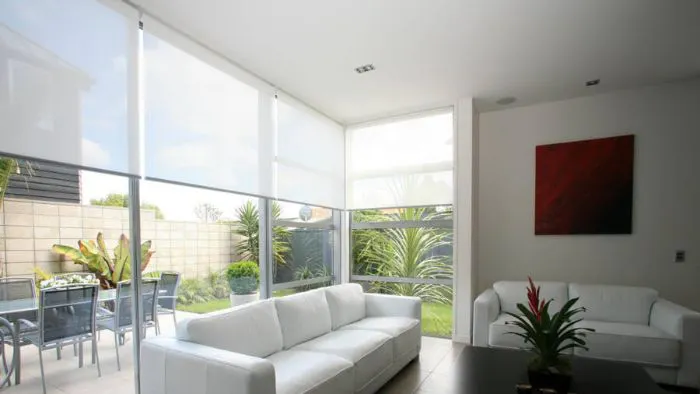
sliding door blind options
Not every blind suits every sliding door. The width of the opening, how the panels move and the space around the door all affect what will work best.
Vertical blinds
Vertical blinds are made for wide openings like sliding doors, bifold doors and large windows, which can be awkward or expensive to cover with other blinds. The vanes draw sideways across the glass, rather than lifting.
The vanes also rotate. Turn them partway to cut glare while still letting light in, or close them fully to darken the room and give you privacy.

Roller blinds
Roller blinds roll up to the top of the door frame, so nothing sits beside the doorway when the blind is open. They come in a wide range of fabrics, including sunscreen, light filtering, blackout and thermal, so you can match each blind to the room's light and privacy needs.
Dual roller blinds
Dual roller blinds put two separate blinds on one bracket, usually a sunscreen and a blackout. During the day, pull down the sunscreen to cut glare while keeping your view of the outdoors. At night, lower the blackout for full privacy.
how do roller and vertical blinds compare?
Roller and vertical blinds both work well on sliding doors, but they differ in light control, look and cost.
Vertical blinds give you more control over the light, because you can angle the vanes to let in more or less light. With roller blinds, the fabric you choose decides how much light comes through.
Roller blinds roll up out of sight, leaving the glass clear. Vertical blinds hang in neat lines and gather into a compact stack at the side when they're open.
On a large sliding door, vertical blinds can cost less, because one blind covers a large area of glass. Roller blinds are also available motorised, so you can open and close them with a remote.
Choose roller blinds for a clear view and more fabric options. Choose vertical blinds if you want to adjust the light during the day or cover a large door for less.
which fabric is best for privacy and light control?
Roller blinds and dual roller blinds come in four types of fabric. Each one gives you a different level of light and privacy.
Sunscreen
Sunscreen fabric reduces glare and UV while still letting you see outside. It's a good choice for living rooms. The sun in New Zealand is strong, and NIWA reports that our peak UV levels are around 40% higher than in similar parts of the Northern Hemisphere.
Light filtering
Light filtering fabric softens the sunlight and gives you privacy during the day. It works well in kitchens and dining areas.

Blackout
Blackout fabric blocks the most light and gives you full privacy. It's ideal for bedrooms and media rooms.
Thermal blackout
Thermal blackout fabric gives you privacy day and night and helps keep the room warm. This makes a real difference on sliding doors, because glass lets heat escape quickly. According to EECA, homes can lose up to 40% of their heating energy through their windows.
Sunscreen fabric lets you see out, but it doesn't give you privacy at night. Once your lights are on inside, people outside can see in. If your sliding doors face the street or a neighbour, choose blackout fabric or a dual roller blind with both sunscreen and blackout.
what to check before choosing blinds for sliding doors
Before you order, check these details so your blinds work well from day one.
Child safety
If you have young children or pets, choose child-safe controls. A chain tensioner holds the chain firmly in place, while motorised blinds have no chain at all.
Control position
Place the control on the side of the door you usually walk up to, and check that your furniture won't get in the way. On tall sliding doors, a longer chain puts the control at a comfortable height.
Roll direction
Roller blinds can roll from the back or the front. A back roll sits closer to the glass, so it blocks more light and helps with insulation. It also suits frames where space is tight. A front roll hides the roll of fabric for a tidier look, but the chain can rub against the fabric if you're not careful.
Fabric samples
Colours can look different on screen than they do in your home. Order free fabric samples before you decide, and we'll courier them to your door.
Measuring and fitting
Sliding doors need careful measuring, so the blind clears the door frame and handle and moves freely when you use the door. Our blind measuring guide takes you through each step, with how-to videos and detailed instructions.
find the right blinds for your sliding doors
Still not sure which blind suits your doors? Our team is happy to help.
At Mr Blinds, we make every blind to measure in our Auckland factory, using laser measuring tools so your blinds fit your doors properly. Because you buy direct from the manufacturer, there are no middleman mark-ups. Each blind comes with a five-year warranty on fabrics, components and workmanship.
If you're in Auckland, Waikato or Whangārei, book a free in-home consultation. One of our consultants will bring samples, measure your doors and install your blinds once they're made. If you're elsewhere in New Zealand, get a self-measure quote and we'll make your blinds and deliver them to your door.